Hope and faith work together but they are not the same thing: hope expects good to come one day, while faith believes you already have what God has promised. In this message from NTC Ministries, the pastor shows how life’s disappointments drain the hope God placed in us as children, and how God anchors that hope with His promise and His oath so that it can carry us into faith.
Below you will find the full video, a structured summary of the sermon, the Scripture behind each point (linked to the New King James Version on Bible Gateway), a timestamped outline, and practical steps for moving from hoping to believing.
Sermon at a Glance
This message was preached at NTC Ministries and posted on August 20, 2024. It runs about 56 minutes and ends with a prayer of salvation. It follows the previous week’s message, “Adam, where are you?”, which looked at how life can bring havoc into our lives.
No child, the pastor says, dreams of growing up to be a drug addict or a thief. Children want to be police officers, firefighters, doctors and nurses. They want to do great things and help people. Then life happens, despair sets in and hope fades. God does not want that. This sermon is about how He restores hope and turns it into faith.
| Detail | Information |
|---|---|
| Speaker | The pastor (not named in the recording) |
| Series | Stand-alone message, following “Adam, Where Are You?” |
| Main text | Hebrews 6:17–19, Proverbs 13:12 and Isaiah 52–54 |
| Key theme | Hope is a pioneer for faith; faith takes hold of what God has already given |
| Length | About 56 minutes, ending in prayer |
An Anchor for Our Hope
The pastor sees the big dreams of a four- or five-year-old as God planting hope within us. Every child imagines being the ship captain who saves everyone. But the onslaught of a fallen, corrupted world buffets that hope until it subsides. As long as someone has a defeated mentality, he says, they are stuck with no hope, and that describes the whole world. Believers in Jesus Christ, however, have hope in them.
He reads Hebrews 6:17–19 from an easy-to-read translation. God wanted to prove that His promise was true and that His purpose never changes, so He added an oath to His promise. God cannot lie in either one. These two unchangeable things encourage us to hold on to our hope, which is like an anchor for the soul, strong and sure.
He illustrates with his own story. As a boy he had vivid dreams of flying. Years later, in prayer, the Lord told him to become a pilot. He shared it with his wife, Pam, and about eight years after that she spotted a newspaper notice for flying lessons at the airport and told him he could not put it off any longer. He earned his license and flew all over the country to minister.
Flying meant he could reach a ministry engagement in hours instead of two days of driving, and then come home to sleep in his own bed, saving motels, restaurants and wasted time on the road. His point is that the dreams and desires you had were not for nothing. They are seeds God planted, and He wants to teach us how to get past life’s disappointments so that hope can bring forth faith.
Hope and Faith Are Not the Same
Hope, the pastor says, is a precursor to faith, “a pioneer for faith.” It goes out in front and helps you reach the potential God has for you. But hope by itself will not get you the promises of God. He quotes Hebrews 11:1: faith is the substance of things hoped for. Hope has no substance; faith does. That, he says, is why many Christians hear about healing and blessing yet do not see it: they are only hoping it will happen one day.
He explains the progression he teaches in a series called From Faith to Faith, Strength to Strength and Glory to Glory (Romans 1:17; Psalm 84:7; 2 Corinthians 3:18). Faith comes by hearing God (Romans 10:17). Then problems come, and you go from strength to strength, holding on because what is impossible with men is possible with God (Luke 18:27). Then you go from glory to glory and take hold of the promise.
The Greek word for hope, he says, is elpis, which means always expecting good no matter what. Expecting bad things is hopelessness, and its synonyms include despair, despondent and unredeemable. To be hopeless is to declare there is no Redeemer. But there is one, and His name is Jesus.
Faith, by contrast, believes you already have it, even though you do not see it, simply because God said it. Hope says one day; faith says today. As Paul wrote, now is the day of salvation (2 Corinthians 6:2). Here are five differences, as the pastor contrasts the two:
| Hope | Faith | |
|---|---|---|
| Role | The pioneer that goes out in front | The substance that takes possession |
| Timing | “One day” | Today |
| Prayer | “I hope this happens” | “I have received it; it’s mine” |
| Source | God’s promise and oath as an anchor | Hearing God’s Word |
| Opposite | Hopelessness: expecting bad, no Redeemer | Living by the senses |
He has the congregation read Mark 11:24–25: whatever you ask in prayer, believe that you have received it, and it will be yours. Walking away from prayer thinking “I hope it happens” is not faith. Jesus also named one barrier: when you stand praying, forgive. How can you tell if you are holding something against someone? If you keep talking about it to others, or it keeps you up at night.
Even the apostles struggled with “sense faith,” which is why Jesus called them a faithless generation (Matthew 17:17). John wrote of what they had seen, looked upon and handled (1 John 1:1). After Jesus ascended, they had to live by faith that He was always with them, because the just shall live by faith (Habakkuk 2:4). Receiving through someone else’s prayer is wonderful, but it is only a start, not God’s best for you.

Hope Deferred Makes the Heart Sick
The pastor reads Proverbs 13:12: “Hope deferred makes the heart sick, but when the desire comes, it is a tree of life.” When a door closes, people often say God must have closed it for a reason, even though He said it was open. He calls that a way of buffering disappointment through our senses. It runs against God, and people end up worse than before, losing not only faith but hope.
Many people had dreams and desires but gave up because one problem followed another until they decided it was hopeless. Yet everything that pertains to life and godliness has already been given (2 Peter 1:3). At the cross Jesus took our sin and gave us His righteousness. We have to move from expecting something to happen to knowing that it has happened.
When the desire comes, it is a tree of life: it breaks bondages and turns a life around. That is why experiential knowledge of God is so important for your progress. He gives an example of holding a promise in faith: “I have been healed by the stripes of Jesus,” not will be or can be one day, regardless of any symptom. When you stand there and the desire comes, you can start passing it on, praying and believing for others who are still only hoping, and discipling them toward faith.
They Did Not Know His Name
To show how to get faith, the pastor turns to Isaiah 52, 53 and 54. Chapter 52 reveals the problem, chapter 53 the cure, and chapter 54 the covenant that makes it secure. Chapter 52 explains why people keep falling back into bondage and despair. When there is no hope, people stop pressing into God: why go to church, read the Bible or pray if nothing happened last time?
Israel spent 400 years in Egypt despite God’s promises of a land of milk and honey, houses they did not build and vineyards they did not plant. Egypt had hundreds of gods, and none fulfilled a single promise. By the time God sent Moses, Israel had no hope left. They just wanted to blend in, keep the taskmaster off their backs and avoid more trouble.
So when God called Moses, Moses asked what to say when the people asked His name (Exodus 3:13–14). They no longer knew who God was. God answered, I AM WHO I AM. The pastor says the Hebrew sounds like a breath, the same breath of life God breathed into Adam (Genesis 2:7). Adam never begged God for anything, because he had been given everything; prayer for him was simply being with the breath of life.
The same mistake surfaced when Jesus came. People wanted deliverance from Rome, but Jesus came to deal with the inside, telling the Pharisees they were like whitewashed tombs (Matthew 23:27). He came to deliver people from despair and despondency.
God reveals Himself by His names, the pastor teaches: Jehovah Shalom, the Lord our peace; Jehovah Jireh, our provider; Jehovah Rohi, our shepherd; Jehovah Tsidkenu, our righteousness; Jehovah M’Kaddesh, who sanctifies us; and Jehovah Rapha, the Lord who heals. Under the old covenant, the priest inspected the lamb, not the person who brought it. Receiving Jesus means presenting the perfect Lamb as our sacrifice. Any idea of God outside His names, such as saying God made you sick, is a false testimony about Him.
In Isaiah 52:5–6, God asks why His people are taken away for nothing while His name is blasphemed every day. People were being abused and blaming Him. His answer: “Therefore My people shall know My name.” Their only problem was that they did not really know God. The pastor says the same is true of much of Christendom today, and that Israel, trained by 400 years of slavery, promised to do everything in the law instead of receiving who God is. We are to humble ourselves under His mighty hand so He can lift us up (1 Peter 5:6).
How Beautiful Are the Feet
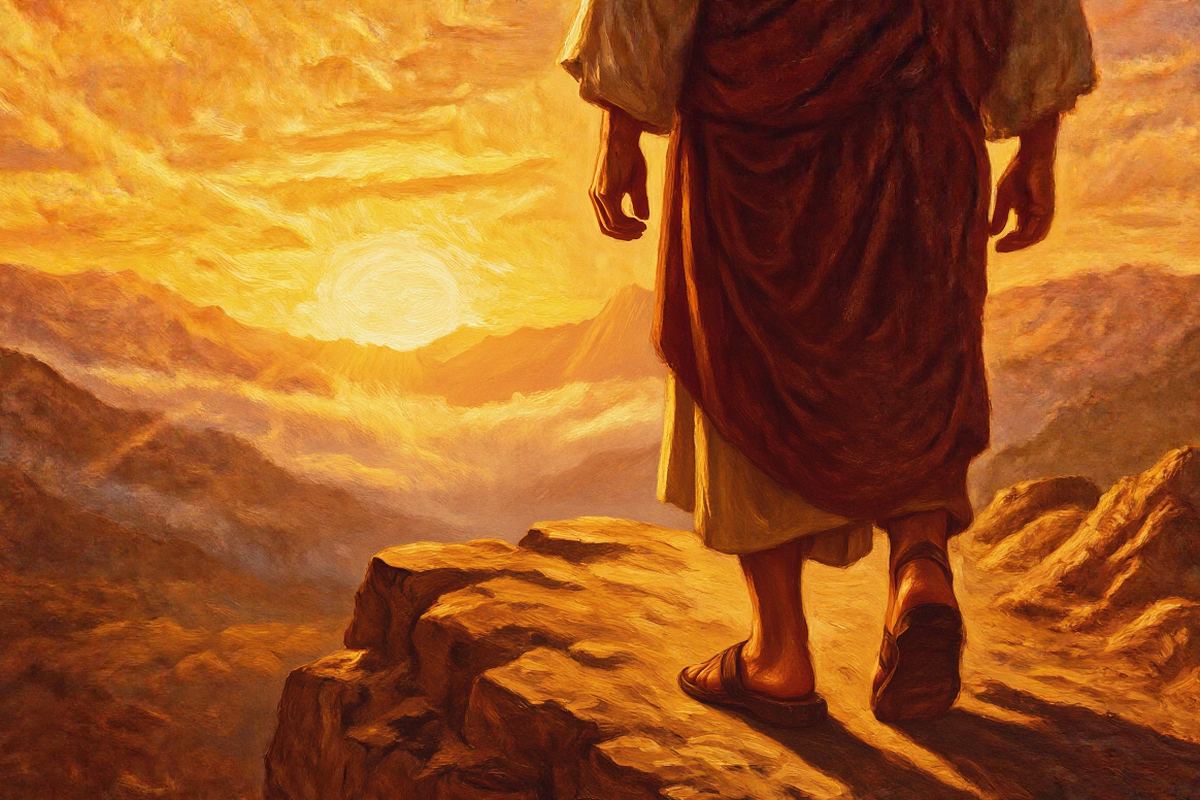
Then comes Isaiah 52:7: “How beautiful upon the mountains are the feet of him who brings good news, who proclaims peace… who says to Zion, ‘Your God reigns!'” When God’s people know His name, the problem is taken away, and good news goes out.
The pastor explains the word parable as two parts: alongside, like a tugboat coming alongside a large ship, and to cast down. Jesus cast stories alongside truth to give people a window into the kingdom. His first parable was about the sower and the Word, because Israel’s leaders were telling no good news, only adding burdens. Jesus ate with tax collectors and sinners and said the sick, not the healthy, need a physician (Matthew 9:12). In His high priestly prayer He said He had declared the Father’s name (John 17:6).
So he asks: are we testifying to our problems, or are we declaring that our God reigns? God wants better for you than you want for yourself, and every good gift comes from above, from the Father of lights with whom there is no variation or shadow of turning (James 1:17). Paul quotes Isaiah in Romans 10:14–15: how shall they hear without a preacher, and how beautiful are the feet of those who preach the gospel of peace.
Before Christ, the pastor says, no one on earth had peace with God except Jesus Himself. Since the cross, we have peace with God through our Lord Jesus Christ (Romans 5:1), peace beyond any problem we can cause or receive. Trying to get peace is hope; faith says, I have the peace of God that surpasses all understanding, guarding my heart and mind (Philippians 4:7).
The Burden Bearer and the Covenant
A burden, the pastor says, is a heavy load that attaches itself to you; you did not pick it up and you cannot set it down. It keeps you up at night and nags at you. Jesus is the burden bearer: “Come to Me, all you who labor and are heavy laden, and I will give you rest” (Matthew 11:28–30). When pressure comes, we hold on to hope and lay the burden at the feet of the one who is the author and finisher of our faith. Circumstances may not change at once, but things go easier.
He illustrates with a television program about divers lowered off Australia in a steel cage. A great white shark, perhaps 25 feet long, rammed the cage. At first the men clung to each other in fear, but when they saw the cage hold, they grew calm, took out their cameras and did what they had come to do. The cage did not stop the attack, but it kept the attacker from reaching them. Jesus said no one can snatch us out of His hand or the Father’s hand (John 10:28–29).
Isaiah 53 is the cure. “Surely He has borne our griefs and carried our sorrows… and by His stripes we are healed” (Isaiah 53:4–6). When someone sent him a video of a theologian claiming this meant only spiritual healing, he answered with Matthew 8:16–17, where Jesus healed all who were sick to fulfill Isaiah: “He Himself took our infirmities and bore our sicknesses.” He asks whether we should believe a scholar or an apostle who lived with Jesus.
He adds that we should never use the Lord’s name in a disrespectful way, because a double-minded man is unstable and should not expect to receive (James 1:6–8). God anointed Jesus with the Holy Spirit and power, and He went about doing good and healing all who were oppressed by the devil (Acts 10:38). Psalm 103:1–4 says to forget not His benefits: He forgives all your iniquities, heals all your diseases and redeems your life from destruction. All God’s promises are yes in Christ (2 Corinthians 1:20).
Isaiah 54 is the covenant. The barren woman is told to sing, to enlarge the place of her tent and stretch out its curtains, and not to fear shame, because her Maker is her husband and the Holy One of Israel is her Redeemer (Isaiah 54:1–5). That is where hope and faith lead: from the problem, through the cure, into a secure covenant with the Redeemer who remembers our sins no more.
Moving From Hope to Faith This Week
The pastor closes by inviting anyone who is tired of struggling to give their life to Jesus, and by asking the church to pray for those watching online. These steps come from the message:
- Revisit your God-given dreams. Treat the desires He planted in you as seeds, not childish fantasies, and bring them back to Him.
- Anchor your hope. Read Hebrews 6:17–19 and remember that God’s promise and oath cannot change.
- Pray as if you have received. After you pray, thank God that it is yours instead of walking away hoping.
- Clear the barrier. If you keep talking about someone’s offense or lose sleep over it, forgive them.
- Learn His names. Get to know God as peace, provider, shepherd, righteousness and healer, so you never blame Him for what He did not do.
- Bring good news. In conversations this week, testify to what God has done rather than to your problems.
Timestamped Outline
- 0:00 Children dream of doing great things
- 0:56 God puts hope within us
- 2:07 Hebrews 6: an anchor for the soul
- 3:06 Dreams of flying and becoming a pilot
- 3:59 Hope is a pioneer for faith
- 6:15 Faith to faith, strength to strength, glory to glory
- 8:34 Elpis: always expecting good
- 10:03 Mark 11:24: believe that you have received
- 12:16 The just shall live by faith; forgiveness
- 14:39 Proverbs 13:12: hope deferred
- 17:04 Isaiah 52–54: problem, cure, covenant
- 19:35 Exodus 3: what is His name?
- 22:48 The redemptive names of God
- 25:30 Isaiah 52:5–6: My people shall know My name
- 29:34 How beautiful are the feet
- 30:54 What a parable is
- 34:27 Romans 10 and peace with God
- 35:50 Jesus the burden bearer
- 38:35 The shark cage
- 40:56 Isaiah 53 and Matthew 8: He bore our sicknesses
- 47:13 Psalm 103: forget not His benefits
- 51:52 Isaiah 54: the covenant
- 54:12 Invitation and prayer
Frequently Asked Questions
Is God angry and lashing out in the book of Revelation?
The pastor says no. Some people read Revelation and picture God as fed up and ready to crush people. He points out that the book’s first verse calls it the revelation of Jesus Christ. He describes God taking His church away to the wedding supper and protecting Israel, while those who follow the Antichrist consume and destroy one another. The God who gives peace that surpasses understanding, he says, is not disturbed or out of control.
Why does he say we need preachers and teachers?
Everyone has a breaking point, he says, and he is not condemning anyone who has lost hope. That is exactly why believers need preachers, teachers and one another to testify to the good things of God and to who He really is. Following Romans 10, he says people cannot believe what they have not heard, so we must keep declaring the good news.
Can I pray this message’s closing prayer myself?
Yes. He leads listeners to pray out loud, asking God to forgive all their sins and to forgive them for trying to live without Him. They give their life to Jesus, thank Him for lifting their burden and healing spirit, soul and body, and ask the Holy Spirit to fill them with love, joy, peace and faith. He stresses that it begins with humility: admitting you cannot change yourself, but He can.
Scripture References
All passages open in the New King James Version on Bible Gateway:
- Hebrews 6:17–19 — hope as an anchor for the soul
- Hebrews 11:1 — faith is the substance of things hoped for
- Mark 11:24–25 — believe that you receive; forgive
- Proverbs 13:12 — hope deferred makes the heart sick
- Exodus 3:13–14 — I AM WHO I AM
- Isaiah 52:5–6 and Isaiah 52:7 — My people shall know My name
- Isaiah 53:4–6 and Matthew 8:16–17 — He bore our sicknesses
- Isaiah 54:1–5 — your Maker is your husband
How this summary was made: written with AI assistance from the sermon’s own transcript and checked against the Scriptures listed above.
Watch More Messages
If this message renewed your hope, there are hundreds more teachings from NTC Ministries waiting for you. Browse the full sermon archive and keep growing from hope into faith.