The law of the spirit of life in Christ Jesus is how God’s kingdom actually works: not by human effort, but by gifts that only function through love. In part four of this series, the pastor walks from creation to Pentecost to show that everything God does is a gift, from righteousness to the Holy Spirit to faith itself, and that the one law of the kingdom is fulfilled in one command, to love one another. He closes with the story of Jacob, a man changed by love.
This message continues from The Law of the Spirit of Life in Christ Jesus — Love, Not Law, Changes the Heart. Below you will find the full video, a structured summary, every Scripture linked to the New King James Version on Bible Gateway, a timestamped outline and practical steps for this week.
Sermon at a Glance
This message was posted on November 26, 2024, and runs about 65 minutes. The pastor explains that he considered jumping ahead to a message about a meal, but chose to continue the series because this teaching builds on the previous week. The meal message, he says, comes next.
His starting point is what he calls the ABCs of the kingdom of heaven. The kingdom is not complicated. It runs on gifts, every gift runs on love, and the Holy Spirit is the one who fulfills in us what the law demanded but could never produce. The table below summarizes the message.
| Detail | Information |
|---|---|
| Speaker | The pastor (not named in this video) |
| Series | The Law of the Spirit of Life in Christ Jesus, part 4 |
| Main text | Romans 8:1–4 |
| Key theme | The kingdom works by gifts, and every gift works by love |
| Length | About 65 minutes, ending with a prayer of salvation |
The ABCs of the Kingdom: Everything Is a Gift
The pastor begins with Jesus’ invitation in Matthew 11:28–30. Those who labor and are heavy laden, he says, are people weighed down with law and with trying to please God by their own work. Jesus offers rest, and His yoke is easy and His burden light. “He meant it,” the pastor adds.
From the start, God gave. Adam did not help create anything; God even planted the garden and breathed life into him. When Adam handed his dominion to Satan, God did not panic. He answered with another gift: “God so loved the world that He gave His only begotten Son” (John 3:16).
Even believing is a gift. We are saved by grace through faith, and that not of ourselves (Ephesians 2:8). The moment we receive Jesus, He gives us righteousness, and those who receive the abundance of grace and the gift of righteousness reign in life (Romans 5:17). Paul longed to visit Rome to impart a spiritual gift (Romans 1:11).
When Jesus ascended, He gave gifts to men: apostles, prophets, evangelists, pastors and teachers, to equip people for the work of the ministry, not the work of the law (Ephesians 4:8–12). Then He gave the Holy Spirit, who brings tongues, interpretation, prophecy, words of wisdom and knowledge, discerning of spirits, miracles, faith and healing.
All of these gifts, he stresses, function in only one element: love. God created man in love, came to redeem him in love, and poured out His love on the cross. Then he turns it personal. None of us asked to be born, and some arrive through great love and some through great pain. He shares that his own mother faced a frightening diagnosis while carrying him. But when you are born again, you are born in pure, perfect love, with a new heart and His Spirit inside you.
No Condemnation for Flawed People
The series text follows: “There is therefore now no condemnation to those who are in Christ Jesus” (Romans 8:1–2). Even when you condemn yourself, the pastor says, you are not condemned, “so stop it.” Living in liberty does not mean you do not care about a wrong action. It means you refuse to condemn yourself over it and let God change you instead.
He contrasts this with the law of sin and death. Christians often hang the Ten Commandments on a wall, he notes, though the law had 613 commandments. On the day Moses read the law, Israel promised to do everything it said, and almost immediately they were opposing it. That is mankind. We became weak through corruption, so the answer is not trying harder but allowing God to change our lives.
There was no perfect church in the New Testament, he says, because churches are made of flawed people, himself included. Yet by one offering Jesus has perfected forever those who come to Him (Hebrews 10:14). Our part is to admit we need a miracle. If you think you are “all that and a bag of chips,” he warns, life will eat you up, but God exalts the humble.
Jesus chose flawed people on purpose. Peter cursed at a servant girl by the fire during Jesus’ trial, and later drifted back toward the law until Paul withstood him to his face. Yet Peter’s shadow healed people. God chose the foolish and weak things of the world to shame the wise, so that whoever glories should glory in the Lord (1 Corinthians 1:26–31). “So I was a perfect candidate,” the pastor says. “You too.”
Jesus said, You did not choose Me, but I chose you and appointed you to bear fruit (John 15:16). If He chose us and declared we would bear fruit, our job is to stay with Him and let the fruit come.
The pastor then tells how he understands the background of Philippians. The church raised money for Paul in prison but sent their pastor, Epaphroditus, to deliver it, and he became deathly sick while serving (Philippians 2:25–30). In the pastor’s telling, the church wanted nothing more to do with him. Paul answered not with rebuke but with confidence that He who began a good work in them would complete it (Philippians 1:6), and told them to receive their pastor back with honor.

The Law of the Spirit of Life in Christ Jesus and Love
There is one law in the kingdom of heaven, the pastor says, the law of the spirit of life in Christ Jesus, and one command: love one another as Jesus loved us. Believers are “a chosen generation, a royal priesthood, a holy nation, His own special people,” called to proclaim His praises (1 Peter 2:9). If Jesus could take the apostles, “a bag of just mixed nuts,” and fulfill His purpose, He can do it with you.
He warns against forgetting who we were before salvation and comparing ourselves among ourselves (2 Corinthians 10:12). Going our own way turns our back on God, and repentance simply means turning around to listen to Him again. He also teaches that God’s plans for each believer are more than the sand in the earth, not one narrow plan but countless ones.
Romans 8:2–4 explains why. The law is holy and pure, but it was weak through the flesh, because we are the ones who had to keep it. God sent His Son so that the righteous requirement of the law might be fulfilled in us who walk according to the Spirit. It is fulfilled not by our efforts but by confidence in what He has done.
That is why the Holy Spirit is, in the pastor’s words, “the governor of our kingdom.” Jesus is seated at the Father’s right hand, and the Holy Spirit is with us now. A church that does not want “that Holy Spirit stuff,” he says, is really saying it does not want God’s kingdom. What looks like a mess when the Spirit moves is often God perfecting what we thought was fine.
So we must be patient with one another, because God is working His goodness in each of us. Walking away from a friend, a family or a marriage because “I’m not putting up with this anymore” is childish, he says. Paul put away childish things (1 Corinthians 13:11). God is about love, and that is what the law of the spirit is.
Our sufficiency is from God, who made us ministers “not of the letter but of the Spirit; for the letter kills, but the Spirit gives life” (2 Corinthians 3:4–6). He points to the apostle John on Patmos. As he relates the history, John’s enemies could not kill him, yet in exile he was “in the Spirit on the Lord’s Day” (Revelation 1:9–10) and received a revelation for the whole world.
He illustrates it from his own working years at a plant that built garbage trucks. Sent to a lonely machine at the end of an 80-foot hallway because he kept sharing the Lord, he worshiped all day. Coworkers lined up for the job, asking who was down there with him. He told them it was Jesus. The man who replaced him called it the worst job he ever had. The difference was the Holy Spirit.
Liberty That Builds Others Up
The pastor has the church read John 13:34–35 aloud: “A new commandment I give to you, that you love one another.” In Galatians 5:6, read from The Passion Translation, all that matters is faith that works through love. Jesus asked whether the Son of Man would find faith on the earth (Luke 18:8), and the pastor connects that faith to confidence in God’s love.
Galatians 5:13–15 sets the boundary. We are called to liberty, but not as an opportunity for the flesh; through love we serve one another. If we bite and devour one another, we are consumed. He compares it to rust on a new vehicle after a couple of salted winters: the small spot on the paint means far more corruption underneath.
He recalls the woman at the well from John 4, whom he calls Photina, to whom Jesus first publicly revealed He was the Messiah. He relates the church tradition that she became a bold witness, led many to Christ and was martyred. Love changed her. Even the disciples did not believe Mary Magdalene’s report of the resurrection (Mark 16:9–11), yet He kept working in them.
Only those inside the family see its goodness, he says, which is why no one can see the kingdom without being born again (John 3:3). Without that new heart, people believe God sends tornadoes and earthquakes. Within the family, the gifts we receive become gifts we give away.
What does that love look like in practice? 1 Corinthians 10:23–24 says all things are lawful but not all edify. To edify, he explains, is to build up or recharge, like hooking a charger to a dead car battery. In verse 24, let each seek the other’s well-being. He also says that fasting does not twist God’s arm; it clears out doubt in you.
Philippians 2:1–4 completes the picture: be of one mind, do nothing through selfish ambition, esteem others better than yourself, and look out for their interests. The law and the commandment, he concludes, are “one and the same.”
How Love Changed Jacob
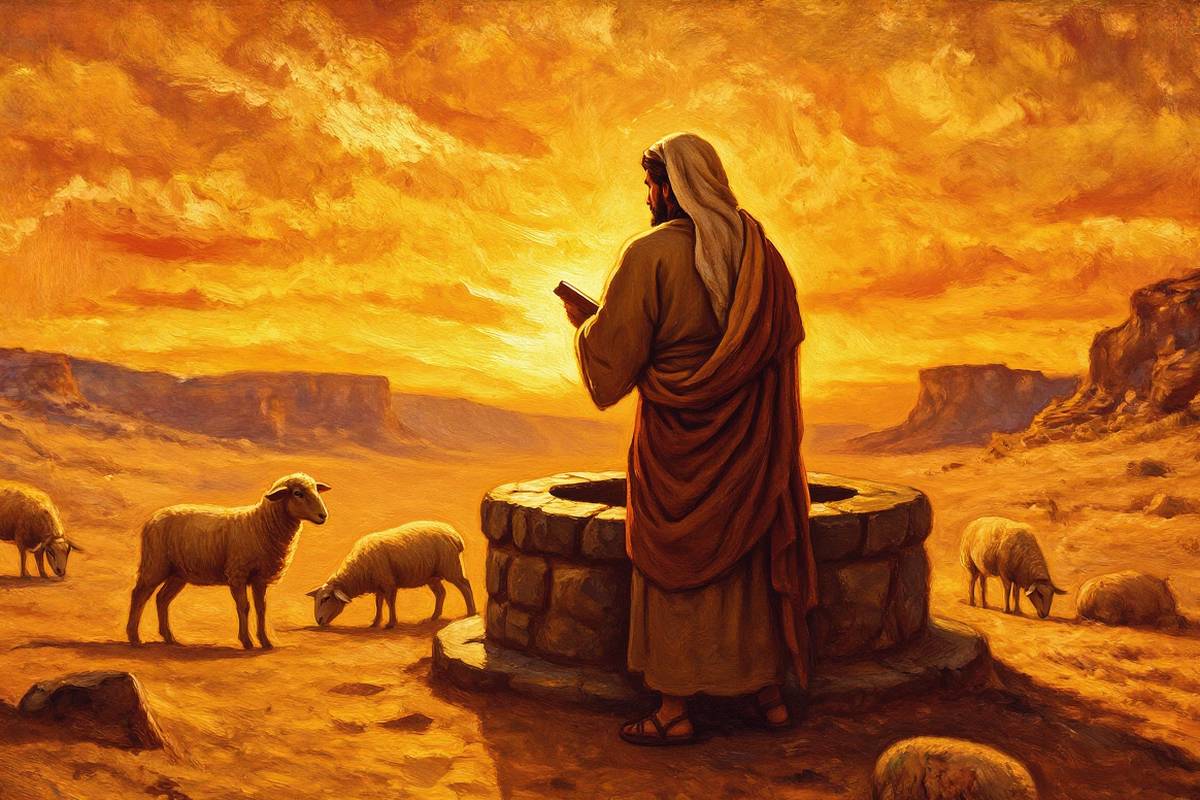
The pastor ends with Jacob, whose name he explains as the heel grabber, the one who takes for himself. Jacob cheated Esau out of his birthright and blessing and fled to his uncle Laban, where he fell in love with Rachel at a well. “Jacob served seven years for Rachel, and they seemed only a few days to him because of the love he had for her” (Genesis 29:20).
Laban gave him Leah instead, and Jacob worked another seven years, about 20 years in all, outwitted by a bigger trickster than himself. Israel served for a wife and kept sheep for a wife (Hosea 12:12). The pastor says he did not know what love was until he met Pam, and that love lay dormant until it found an object of affection. God, he adds, did not create Adam because He was lonely, but to have someone to love.
Love changed Jacob’s whole attitude. The table below traces the change the pastor describes.
| Before love | After love |
|---|---|
| Grabbed his brother’s heel at birth | Went back home seeking to restore his family |
| Took Esau’s birthright and blessing | Gave Esau sheep, goats, donkeys and camels |
| Cheated and tricked to get ahead | Put up with Laban’s tricks for love’s sake |
| Named Jacob, the heel grabber | Renamed Israel, a prince with God |
| Fled hundreds of miles from his family | Father of twelve sons who became the tribes of Israel |
After wrestling through the night with a man who could not prevail against him, Jacob heard, Your name shall no longer be Jacob, but Israel (Genesis 32:24–28). The pastor counts over 550 animals in Jacob’s gift to Esau and estimates their modern value at over $650,000. Esau said he did not need it; Jacob insisted. How did God fulfill the prophecy spoken over him before birth? “By love,” the pastor says.
No matter how hurt or betrayed you are, even if your faith is a smoking wick, God will not quench it (Isaiah 42:3), because He wants you to find His love. Your calling is to fulfill the royal law, to love your neighbor as yourself (James 2:8).
He tells of a three-year-old who “washed” his father’s newly bought car with handfuls of sand. His heart was right, even though the result was not. Family looks at the heart, he says, as God does; He has sworn never to be angry with His people again (Isaiah 54:9). The hope we have will not disappoint, because God has poured His love into our hearts by the Holy Spirit (Romans 5:5).
Living It Out This Week
The pastor promises that when the Holy Spirit fills a life with love, even a “dud” job, marriage or church can become a paradise, not because we are great but because God is. Here are practical steps drawn from the message:
- Receive before you try. Thank God for His gifts of righteousness, faith and the Holy Spirit instead of working to earn them.
- Stop condemning yourself. Own a wrong action, then let God change you, because there is no condemnation in Christ.
- Look for God’s hand in others. Like Paul with the Philippians, speak about what God is completing in people, not their flaws.
- Edify one person. Build up a family member or coworker the way a charger revives a dead battery.
- Read hearts, not results. When someone’s good intentions go wrong, respond like a father to the boy with the sand.
- Pray “Lord, change me.” The pastor asks the church to say it aloud, trusting the Holy Spirit to do the work.
Timestamped Outline
- 0:00 Continuing the series; the ABCs of the kingdom
- 1:01 Come to Me, and the gift of creation
- 2:00 Saved by grace, the gift of righteousness
- 3:06 He gave gifts to men: Ephesians 4
- 4:06 The gifts of the Holy Spirit work by love
- 7:33 Romans 8:1–2: no condemnation
- 10:48 No perfect church; perfected forever
- 11:55 Flawed apostles God still chose
- 14:27 The Philippian church and its pastor
- 16:31 One law, one command: a chosen generation
- 18:57 Romans 8:2–4: weak through the flesh
- 23:21 John on Patmos, in the Spirit
- 26:49 The worst job in the plant
- 28:24 A new commandment: John 13
- 30:33 Called to liberty, not the flesh
- 32:49 The woman at the well
- 37:29 You must be born again to see
- 40:58 All things lawful, not all edify
- 44:27 Philippians 2: the interests of others
- 45:35 Jacob the heel grabber
- 50:29 Seven years that seemed like days
- 52:53 Wrestling and a new name
- 56:47 The royal law of love: James 2:8
- 1:03:26 Romans 5:5 and the prayer of salvation
Law of the Spirit of Life Series
This message is part of a teaching series at NTC Ministries. Start from the beginning or continue where this one leaves off:
- First message: The Law of the Spirit of Life in Christ Jesus #1: No Condemnation in Christ
- Previous: The Law of the Spirit of Life in Christ Jesus — Love, Not Law, Changes the Heart
- You are here: The Law of the Spirit of Life in Christ Jesus #4: Gifts That Work by Love
- Next: The Law of the Spirit of Life in Christ Jesus, Part 6 — Love Is the Royal Law
Frequently Asked Questions
Does liberty in Christ mean I can do whatever I want?
No. The pastor reads Galatians 5:13 to show that liberty is not an opportunity for the flesh. Grace, he says, is not doing anything you want. Love sets the limit, because love serves others and does not open a path to problems in your life. All things may be lawful, he says, but not all things build you up, so the question becomes whether a choice edifies you and others.
Does fasting persuade God to answer prayer?
The pastor says fasting is not arm wrestling with God, as if one more skipped meal will make Him give in. Fasting is for you. Faith is built by hearing the Word of God, he teaches, while the doubt that is in everyone is dealt with by fasting. He adds that you do not need a hundred people to pressure God; you and God are a majority.
Why did God choose such flawed people?
Because the kingdom runs on His gifts, not our qualifications. The pastor notes that the apostles got angry, doubted and resisted Jesus, and Peter cursed at a servant girl, yet God chose them and they spread the knowledge of Christ everywhere. God chose the foolish and weak things so no one could boast except in the Lord. What He chose, He will complete.
Scripture References
All passages open in the New King James Version on Bible Gateway:
- Romans 8:1–2 and Romans 8:2–4 — the law of the Spirit of life
- Matthew 11:28–30 — My yoke is easy
- Ephesians 2:8 and Romans 5:17 — the gifts of faith and righteousness
- Hebrews 10:14 — perfected forever
- 1 Corinthians 1:26–31 — God chose the weak things
- 2 Corinthians 3:4–6 — the Spirit gives life
- Galatians 5:13–15 — called to liberty
- Genesis 29:20 — Jacob’s seven years for Rachel
- James 2:8 — the royal law
How this summary was made: written with AI assistance from the sermon’s own transcript and checked against the Scriptures listed above.
Watch More Messages
If this message helped you rest in God’s love, there are hundreds more teachings from NTC Ministries waiting for you. Browse the full sermon archive and keep growing in the life of the Spirit.